
Lapeer County Projected Release Dates
A projected or scheduled date looks forward. It is based on the sentence, credit, custody system, and facts known when the date was calculated. An actual release date looks back at a completed event. For a Michigan prisoner, OTIS may display an Earliest Release Date and Maximum Discharge Date. Neither is a universal promise that the person will walk out on that day.
The Earliest Release Date, often called ERD, is when the Parole Board may gain jurisdiction after the controlling minimum under the applicable rules. Maximum Discharge is the outer sentence date if parole does not occur sooner, subject to the governing sentence and any legacy credits. Date Paroled is retrospective. It indicates the person left prison or acquired parole status in another supervised setting.
A pretrial detainee has no sentence-based release date. Bond may be posted, a judge may change custody terms, the case may be dismissed, or another hold may prevent release. The jail can require time to process an authorized exit. The court order explains authority, while the jail record supplies the physical release time.
Find Lapeer County Release Dates
The right search follows the custodian. OTIS is appropriate for Thumb Correctional Facility and other MDOC cases. It explicitly excludes people whose sentence was only in a county jail. Lapeer County Jail time is checked through the judgment, jail records, and the county’s own credit rules. A current jail list cannot calculate an older release after the person disappears from it.
- Identify the custody system. Determine whether the person is pretrial at Lapeer County Jail, serving a local sentence, in an MDOC prison, or under another custodian.
- Open the court case and read the judgment, sentence commencement, jail credit, bond events, and later orders. Search both Lapeer courts when a felony moved from district to circuit court.
- For an MDOC prisoner, open OTIS. Search by MDOC number when possible, confirm identity, and read Current Status before any date.
- Compare Earliest Release Date, Maximum Discharge Date, and Date Paroled. Keep eligibility, sentence end, and actual prison exit separate.
- For a local sentence, ask Lapeer County Jail records or time-computation staff which jail credit, good time, trustee credit, and commencement date apply.
- Confirm the event after it occurs through the jail release sheet, OTIS status, an MDOC discharge record, or an agency-fed release alert.
The broader Lapeer County released-inmate record path helps when a roster absence could mean transfer rather than release.
Lapeer County OTIS Date Fields
OTIS covers prisoners, parolees, probationers, and people discharged from MDOC supervision within three years of their supervision-discharge date. It does not cover an ordinary jail-only sentence. A Lapeer County resident may also be assigned to a prison or supervision office outside the county, so search the person rather than assuming the former location controls.
| OTIS Field | How to Read It |
|---|---|
| Current Status | Whether MDOC reports prisoner, parolee, probationer, discharged, or another listed state |
| Earliest Release Date | The parole-eligibility threshold under the controlling minimum and applicable rules, not a guaranteed exit |
| Maximum Discharge Date | The outer sentence date if parole does not occur earlier, subject to controlling law |
| Date Paroled | Retrospective evidence of prison exit onto parole or the conferral of parole status |
| Supervision Discharge Date | The end of MDOC supervision, which is later than release onto parole |
| Assigned Location | The prison or field office connected to current custody or supervision |
The official MDOC date explanation is captured below.
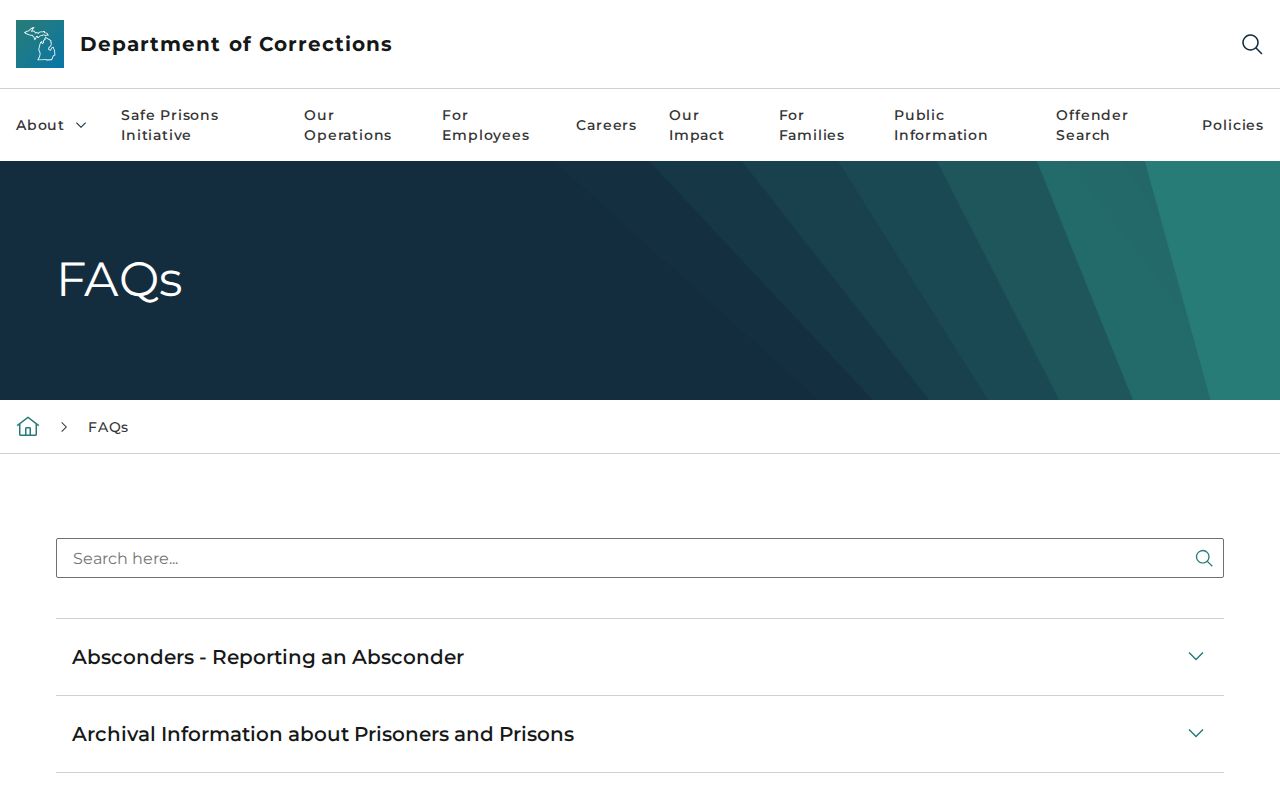
The source shows why one Michigan sentence can carry more than one public date and why the labels should not be collapsed into a single promised release.
Lapeer County Prison Release Rules
Michigan is not accurately described by a generic “85 percent” rule for modern MDOC sentences. The MDOC truth-in-sentencing explanation states that the modern framework requires service of the full judicial minimum in prison before parole consideration. Listed assaultive crimes committed on or after December 15, 1998, and other crimes committed on or after December 15, 2000, do not receive old-style good-time or disciplinary-credit reductions to that minimum. Jail credit still counts.
Modern disciplinary time is bad time accrued for qualifying misconduct. It is considered by the Parole Board instead of acting like a simple arithmetic extension displayed as one new release date. Legacy prisoners may fall under older good-time or disciplinary-credit law, including MCL 800.33, depending on offense date and statutory exclusions. Applying a modern rule to an older sentence, or the reverse, can produce a false date.
MCL 791.234 governs core parole-eligibility issues. It addresses Board jurisdiction, full-minimum treatment for disciplinary-time prisoners, consecutive sentences, and expressly nonparolable offenses. Certain life sentences have timing based on offense date, while first-degree murder and other listed offenses are nonparolable. The judgment, offense date, statute, and sentence structure must be reconciled before stating eligibility.
The state’s published explanation appears in this research-matched image.
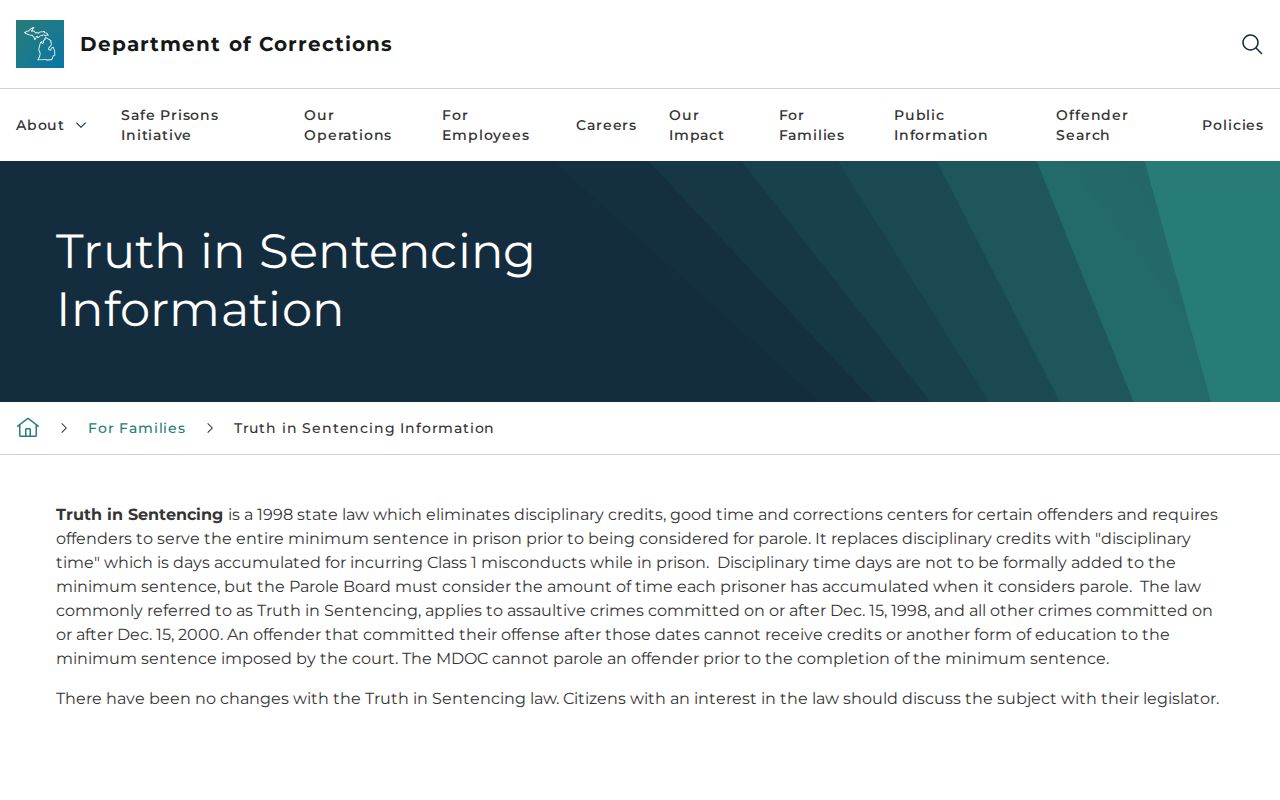
It supports the key distinction between serving the minimum and being approved for parole after the Board gains authority to act.
Note: An eligible date permits parole consideration under controlling law; it never guarantees that the Board will authorize release.
Lapeer County Jail Good Time
Lapeer County Jail uses a separate local credit framework. The 2025 county rulebook says consecutive-day inmates receive good time, while weekend-service inmates do not. Its published ladder awards no credit for zero through five days, then one day for six through eleven, two for twelve through seventeen, three for eighteen through twenty-three, four for twenty-four through twenty-nine, and five for thirty through thirty-five. Treatment beyond the displayed range should be verified with the jail.
MCL 51.282 provides the county-jail good-behavior framework, while MCL 51.283 addresses notice and responsibility for calling an eligible credit to the sheriff’s attention. These local statutes and rules do not replace Michigan’s state-prison truth-in-sentencing law.
| Consecutive Jail Term | Published Good-Time Credit |
|---|---|
| 0 to 5 days | 0 days |
| 6 to 11 days | 1 day |
| 12 to 17 days | 2 days |
| 18 to 23 days | 3 days |
| 24 to 29 days | 4 days |
| 30 to 35 days | 5 days |
Do not calculate an official release date from this table alone. Sentence commencement, court jail credit, misconduct, other holds, and the classification of service can change the answer. The sheriff’s computation and actual release record control the county event.
Lapeer Release-Date Credit Differences
Lapeer’s local rules add an important computation quirk. Eligible sentenced minimum- or medium-risk trustees may seek day-for-day or work-site trustee credit, subject to selection and medical clearance. Trustee status is not automatic for every detainee. Misconduct can end the status and lead to loss of accumulated work-site time or a recommended loss of good time.
Weekend-service inmates are expressly outside the county rulebook’s normal good-time ladder. County good time, trustee credit, court jail credit, and bond release are four different concepts. Good time may reduce an eligible local sentence. Trustee credit depends on placement and performance. Jail credit comes from time legally credited to the sentence. Bond is a court-authorized route out of pretrial custody, not a sentence credit.
This distinction is the reason Lapeer County Jail arithmetic must never be carried into a Thumb Correctional Facility case. State prisoners face the MDOC minimum, parole eligibility, Parole Board action, and maximum discharge framework. County detainees face the local judgment and sheriff’s jail computation. The two facilities sit close together, but their release-date rules are not interchangeable.
Lapeer County Release-Date Changes
A public date is only as stable as the facts behind it. New court action, a corrected judgment, consecutive terms, a hold, or misconduct can change the path. Parole can create an earlier actual prison exit than maximum discharge, but only after Board approval and release planning. A denied or deferred decision means the earliest date did not become an exit date.
| Factor | Possible Effect | Best Confirmation |
|---|---|---|
| Court jail credit or corrected sentence | Changes the controlling start, minimum, or credited time | Judgment and later court orders |
| Consecutive sentences | Can aggregate controlling minima and maxima | OTIS sentence rows and judgment |
| Misconduct or disciplinary time | May affect local credit, trustee time, or Board review | Custody agency computation and record |
| Detainer or other hold | Can turn a planned exit into transfer to another custodian | Jail or MDOC release record naming the receiving agency |
| Parole grant, denial, or deferral | Determines whether eligibility becomes release, later review, or a pending decision | Board communication and OTIS Date Paroled |
| Placement and release coordination | Can create time between a favorable decision and actual exit | Parole Release Unit and current OTIS status |
A detainer is a request by another agency to hold or transfer a person when the current custodian would otherwise release them. It can change the destination without changing the fact that Lapeer or MDOC custody ended. Ask which agency accepted custody before calling the event community release.
Confirm Lapeer County Release Dates
After the expected date arrives, check the custodian’s retrospective field. For a county jail sentence, obtain the release sheet or jail-register entry with the actual date and time. For a state prisoner, read OTIS Current Status and Date Paroled. If the person reached maximum discharge, request the discharge certificate when documentary proof is needed.
MI-VINE can add an agency-fed alert for release or transfer. Its timing depends on the supplying feed and the alert is not a certified certificate. Registration steps and the phone PIN are covered in the Lapeer County VINE inmate check. Court records should still be read for the legal basis, especially when bond, resentencing, dismissal, or a later order changed the expected outcome.
Write down the system, search date, identifier, exact status, and whether the field is prospective or retrospective. That small record prevents “earliest,” “maximum,” “scheduled,” and “released” from being mixed together. When sources disagree, contact the office that owns the disputed field instead of averaging dates or choosing the earliest one.
A negative result also needs context. OTIS may omit a jail-only sentence, a record beyond its post-discharge display period, or a name entered differently. A missing county roster entry may mean release, transfer, or a data change. Recheck identity, ask the current or former custodian, and use a focused records request before stating that no release record exists.
Note: A release date should be reported with its source and label, since eligibility, parole, discharge, and physical exit answer different questions.